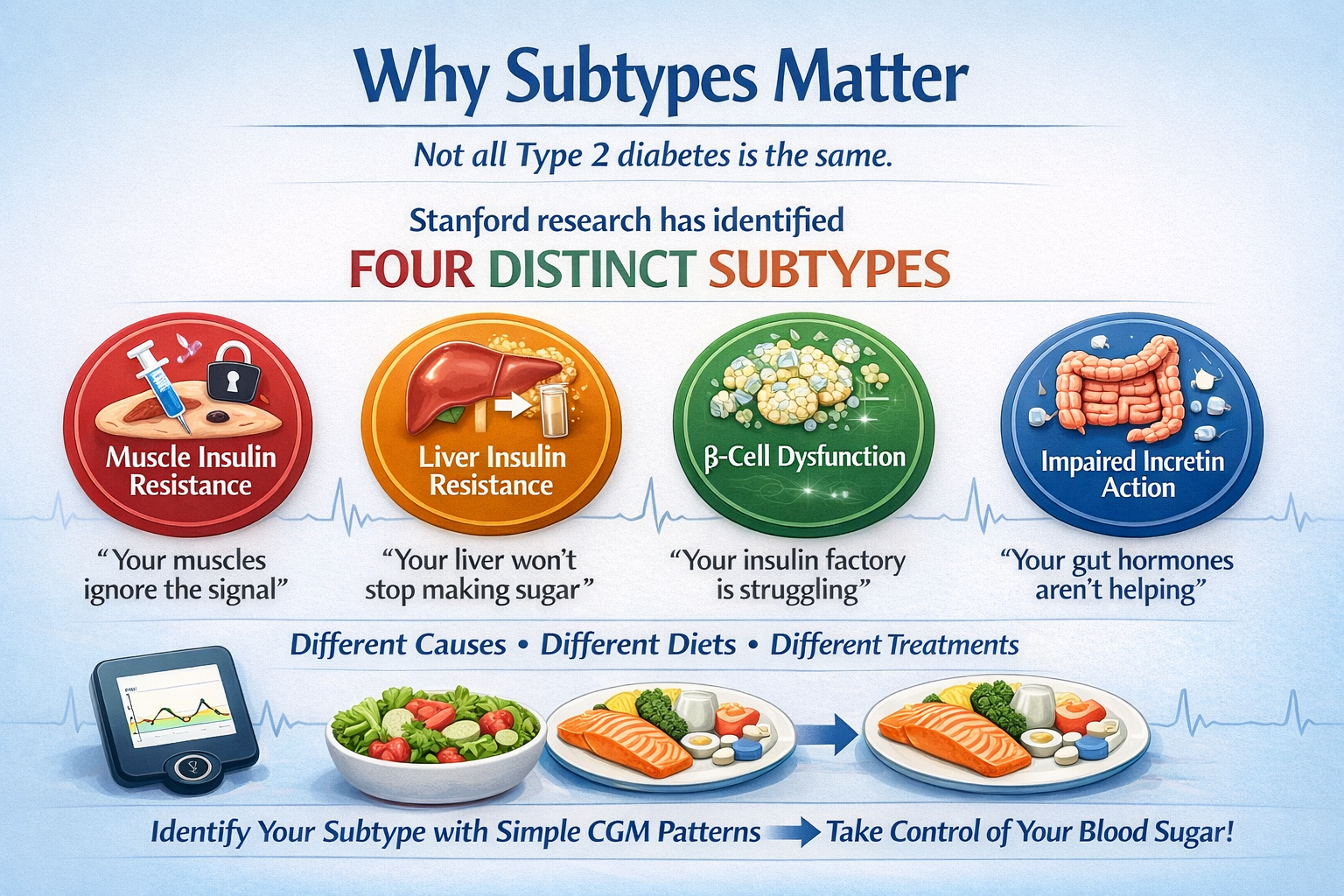
💡 Why subtypes matter: Not all Type 2 diabetes is the same. Recent Stanford research has identified four distinct subtypes—each with different underlying causes and each responding best to different foods and treatments. By identifying your specific subtype using simple CGM patterns, you can choose the right diet, target the real problem, and take control of your blood sugar more effectively.
What is Type 2 Diabetes?
Type 2 diabetes is a chronic condition where your body either doesn't produce enough insulin or doesn't use insulin effectively (insulin resistance). Insulin is the hormone that helps glucose (sugar) enter your cells to be used for energy.
When this process breaks down, sugar builds up in your bloodstream instead of being used by your cells. Over time, high blood sugar can lead to serious complications affecting the heart, kidneys, eyes, nerves, and blood vessels.
Unlike Type 1 diabetes (an autoimmune condition), Type 2 is often linked to lifestyle factors and develops gradually. The good news: it can often be managed—and sometimes reversed—through diet, exercise, and medication.
- Type 2 accounts for 90-95% of all diabetes cases
- Often develops after age 45, but increasingly seen in younger people
- Risk factors include obesity, physical inactivity, family history, and certain ethnicities
- Many people have prediabetes for years before developing Type 2
📊 Global Statistics
Diabetes has become one of the fastest-growing health challenges worldwide:
- China: 141 million adults (highest globally)
- India: 74 million adults
- United States: 32 million adults
- Middle East & North Africa: Highest prevalence (16.2%)